
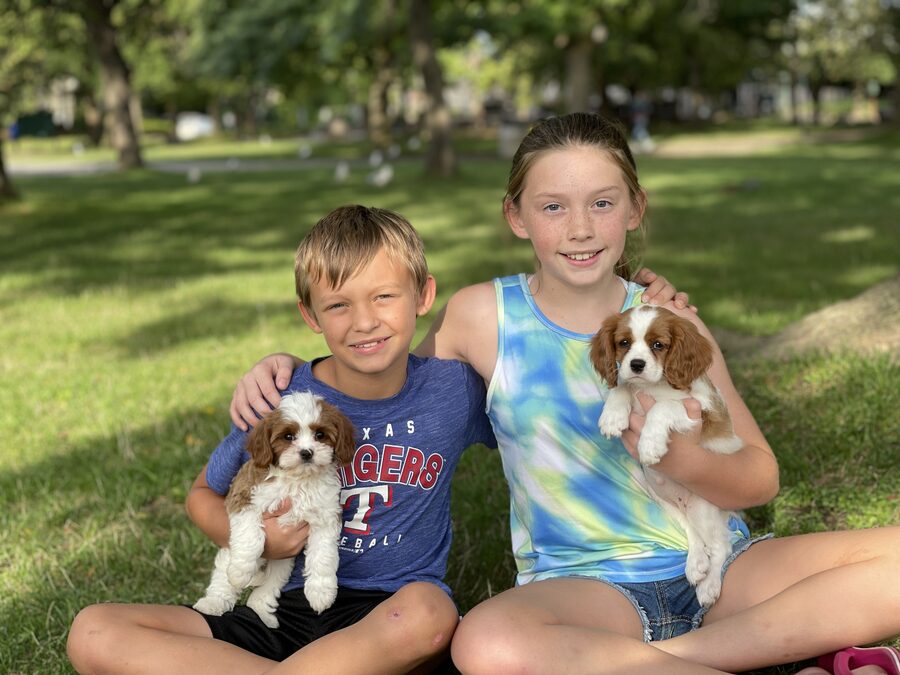
Puppies are born with antibodies from their mother's milk. Those antibodies fade over the first few months — and while they are fading they also block vaccines from taking full effect. That is the whole reason puppy vaccines come as a series of boosters rather than a single shot: nobody knows the exact week a given puppy's maternal immunity drops, so the series covers the window.
The standard timeline
| Age | Typically given |
|---|---|
| 6–8 weeks | First DHPP (distemper, hepatitis, parainfluenza, parvovirus); first deworming |
| 10–12 weeks | Second DHPP; optional leptospirosis, Bordetella |
| 14–16 weeks | Third DHPP; rabies (legally required in the US) |
| 12–16 months | DHPP and rabies boosters |
| Annually | Wellness exam; boosters per your vet's schedule |
Your puppy leaves us with its age-appropriate vaccinations already done and full written records, so your vet can pick up the series exactly where we left off. Bring those records to your first appointment.
Core versus optional
Core vaccines are recommended for every dog: distemper, hepatitis (adenovirus), parvovirus, parainfluenza and rabies. Parvo in particular is why this schedule is not negotiable — it is brutal, it is common, it survives in soil for months, and it kills unvaccinated puppies.
Non-core vaccines depend on your dog's actual life. Bordetella if they will board, attend daycare or go to group classes. Leptospirosis if you have standing water, wildlife or a lot of rural exposure — increasingly recommended across much of Texas. Canine influenza and Lyme in specific circumstances. Your vet knows your area; ask them.
Socialising safely before full protection
Here is the genuine tension in puppy raising: the critical socialisation window closes at about sixteen weeks, and full vaccine protection arrives at about the same time. Keeping a puppy sealed indoors until it is fully covered protects it from parvo and leaves you with an adult dog that is frightened of the world — and behavioural problems euthanise far more dogs than infectious disease does.
The veterinary behaviour consensus is to socialise deliberately but smartly.
- Your own garden and home are fine from day one.
- Carry your puppy in public — hardware stores, outside cafés, a bench by a school at pickup.
- Invite friends' vaccinated, healthy adult dogs to visit your home.
- Attend a puppy class that requires proof of first vaccinations and cleans its floors.
- Avoid dog parks, pet shop floors, rest stops and anywhere unknown dogs toilet, until fully covered.
Beyond vaccines
Monthly heartworm prevention matters enormously in Texas — mosquitoes are year-round here and heartworm is far cheaper to prevent than to treat. Add flea and tick prevention, follow your vet's deworming schedule, and book a wellness exam within the first few days of bringing your puppy home. That first visit also starts the clock on most breeder health guarantees, including ours.
Frequently asked questions
Wait until roughly two weeks after the final vaccination in the series, usually around 16–18 weeks, and confirm with your vet. Before then, socialise in controlled ways instead — carrying the puppy in public and meeting known vaccinated adult dogs.
Core vaccines are DHPP (distemper, hepatitis, parainfluenza, parvovirus) given in a series at roughly 6–8, 10–12 and 14–16 weeks, plus rabies at 14–16 weeks. Bordetella, leptospirosis and others are added based on your dog's lifestyle and region.
Antibodies from the mother's milk block vaccines from taking full effect, and they fade at an unpredictable age. The series ensures that whenever maternal immunity drops, a vaccine is there to take over.
Every puppy leaves us with its age-appropriate vaccinations and deworming complete, plus full written records so your vet can continue the series seamlessly.